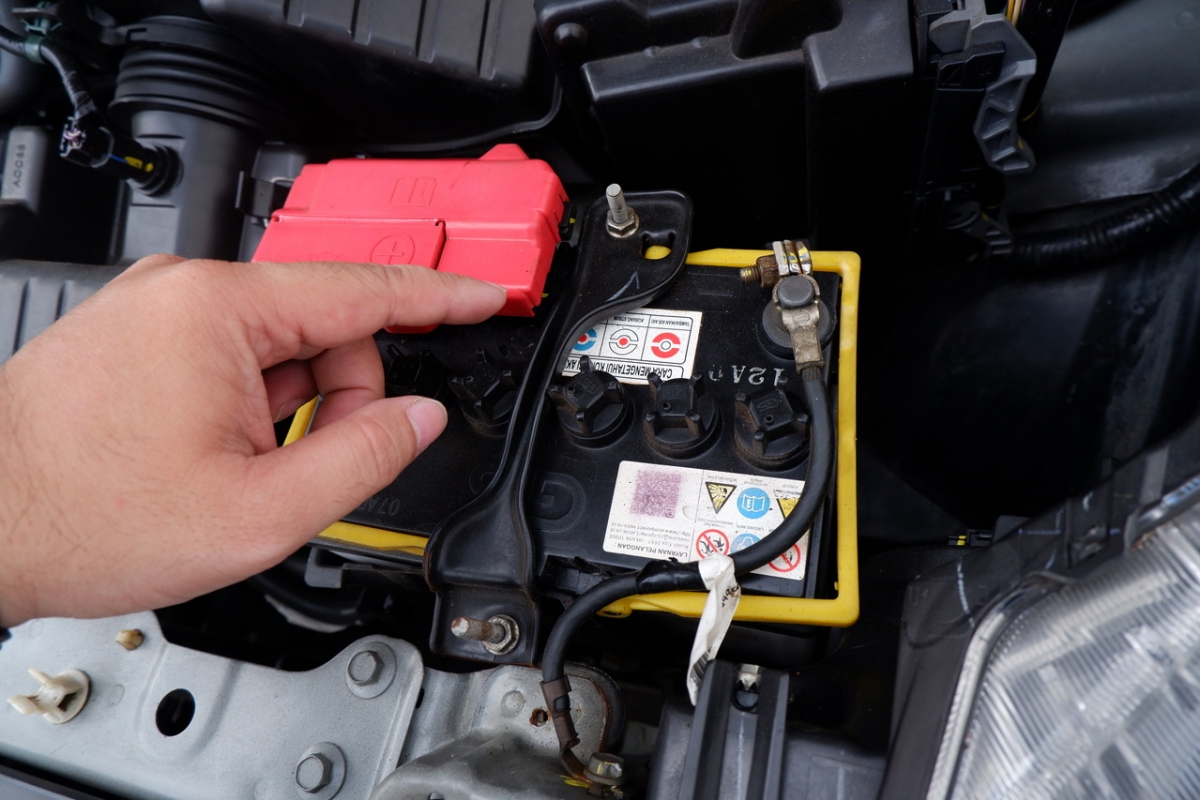
Battery CCA Basics
CCA stands for Cold Cranking Amps, a rating that describes how much current a battery can deliver at low temperature while maintaining a minimum voltage under a standardized load test. Most automotive batteries are rated at 0°F (−18°C) using SAE test procedures, though the exact standard can vary by region and label. A used battery can still crank in mild weather while failing under colder conditions, so CCA testing focuses on the battery’s ability to sustain voltage during a heavy draw.
CCA is not the same as capacity (amp-hours). A battery can have decent capacity yet still struggle to deliver high current if internal resistance rises. That internal resistance increases with age, heat exposure, vibration, and sulfation, which is why two batteries with the same labeled CCA can behave differently after years of service.
When you shop for a used car, the battery’s CCA rating on the label matters only if the battery is healthy and matched to the vehicle’s electrical demands. Many cars also use smart charging and start-stop systems, which change how batteries age and how they should be tested. If your goal is to avoid a “cranks now, fails later” surprise, you need tests that measure voltage under load or estimate internal resistance rather than relying on a resting voltage alone.
Common Testing Mistakes
People often treat a battery as a single number problem, then compare only the label CCA to a tester’s “good/bad” result. That approach misses the reason CCA matters: the battery must hold voltage while delivering high current. A resting voltage reading can look acceptable even when one cell is weak, because the battery may recover voltage after the load is removed.
Another frequent mistake is testing right after the car was driven or right after a charger was connected. Surface charge can temporarily raise voltage and mask a weak battery. If you test, wait long enough for the battery to settle, and record the ambient temperature because cold weather testing changes the interpretation of results.
Buyers also confuse battery health with charging system health. A battery can test weak because the alternator or DC-DC converter undercharges, or because a parasitic draw drains it. If you only replace the battery without checking charging and draw, the new battery can fail early, which feels like bad luck but usually traces back to a system issue.
Finally, many testers rely on different methods. Some use conductance (internal resistance estimation), others perform a load test, and some require the battery’s state-of-charge to be within a certain range. A tester that reports “replace” may still be recoverable if the battery is simply undercharged, while a tester that reports “good” can miss a battery that fails under a specific cold-crank scenario.
How To Test CCA
Use A Battery Tester
A dedicated battery tester gives the most direct answer for CCA-related performance. Conductance testers (often called “battery analyzers”) estimate internal resistance and infer health, while load testers apply a controlled draw and watch voltage response. Follow the tester’s prompts for battery type (flooded, AGM, EFB) and nominal voltage (12V systems are common, but some vehicles use 24V in commercial contexts). On my bench, a common workflow is: connect clamps, enter battery type, wait for the reading, then note the date code and the tester’s health percentage—version 2.0 style screens vary by brand, but the logic stays the same.
Realistic outcomes: a healthy battery typically shows strong voltage under load and low internal resistance. A weak battery shows either a large voltage drop during the test or high internal resistance that predicts poor cold cranking. If the tester indicates “recharge then retest,” do that and retest after the recommended rest period; otherwise you risk judging a battery that is temporarily undercharged.
Measure Resting Voltage
A multimeter can screen for obvious problems, but it cannot replace a load or conductance test. Measure voltage with the vehicle off and accessories off. For a 12V lead-acid battery, readings around 12.6V often correspond to a fully charged state, while readings closer to 12.2V suggest a lower state-of-charge. These thresholds are approximate and depend on battery chemistry and temperature, so treat them as a starting point rather than a verdict.
If resting voltage is very low (for example, around 12.0V or below), the battery may be sulfated, deeply discharged, or suffering from a shorted cell. In that case, a tester may still report “replace,” but you should also check for charging and parasitic draw because a battery that repeatedly drops to low voltage rarely stays healthy without addressing the cause.
Do A Load Voltage Check
If you have access to a load tester or a carbon-pile style tester, you can observe voltage sag under a controlled draw. The goal is to see whether the battery holds voltage while current is applied, which mirrors the CCA concept. Many shop procedures use a load that approximates a fraction of the battery’s rated CCA; the exact current depends on the tester and the battery’s rating. Without a tester designed for this, DIY “jump start” loads are inconsistent and can damage batteries or wiring.
As a practical rule, a battery that collapses quickly under load points to high internal resistance or a failing cell. A battery that holds voltage better under load but reads weak at rest may be undercharged or suffering from surface charge effects. This is why you often see “recharge and retest” instructions on analyzers, and why testing after a charger session can mislead.
Interpret Results With Context
Interpretation depends on battery type, age, and the vehicle’s electrical behavior. AGM and EFB batteries can tolerate different charge profiles than flooded batteries, and some analyzers require the correct type selection to avoid skewed results. Record the battery’s date code from the label; many manufacturers print a month/year code, and a battery older than about 3–5 years often deserves closer scrutiny even if it passes a quick test.
Also check for corrosion at terminals, loose clamps, and cracked cases. High resistance at the terminals can mimic a weak battery by increasing voltage drop during cranking. If the tester’s result seems inconsistent with the physical condition, clean terminals and retest after the battery settles.
Temperature matters too. A battery that performs acceptably at 70°F can fail in winter if its internal resistance rises. If you test in warm conditions, focus on internal resistance and voltage under load rather than trying to “predict” a specific cold-crank outcome.
Case Examples For Buyers
Scenario: Undercharged Battery
A buyer inspects a used sedan with a battery label showing 650 CCA. The multimeter reads about 12.3V, which suggests partial charge. A conductance tester reports “weak” and recommends charging. After charging to the tester’s target state and waiting the rest period shown on the analyzer screen (the brand’s manual often specifies a short settle time), the retest shows “fair” with improved health. The buyer checks the alternator output and finds it within spec, so the likely cause is storage or short trips rather than a failing charging system.
Scenario: Weak Cell With Good Resting Voltage
A second buyer checks a hatchback that starts normally in mild weather. Resting voltage reads around 12.6V, which looks healthy. A load test shows a sharp voltage drop during the draw, and the tester flags a failing battery condition. Terminal inspection reveals minor corrosion, but cleaning does not change the load behavior. The buyer treats the battery as unreliable for cold starts and also checks for a parasitic draw because a battery that stays near full charge yet fails under load can still be a weak-cell situation rather than a simple undercharge.
CCA Testing Checklist
| Check | What You Measure | What It Suggests | Next Step |
|---|---|---|---|
| Battery Label | CCA rating, battery type, date code | Matches vehicle needs; age risk estimate | Confirm type selection on tester; note age |
| Resting Voltage | Multimeter reading with car off | State-of-charge clue, not health proof | If low, charge and retest with a tester |
| Conductance Or Load | Internal resistance or voltage sag | Health and cold-crank capability | If weak, plan replacement and check charging |
| Terminal Condition | Corrosion, looseness, heat marks | Voltage drop during cranking | Clean and retest before judging battery |
| Charging System | Alternator/charging voltage while running | Undercharging or overcharging causes early failure | Test with a shop procedure; fix root cause |
Step-by-step checklist for a used-car inspection: photograph the battery label, measure resting voltage, run a battery analyzer or load test, clean terminals if corrosion is present, then verify charging voltage with the engine running. If the tester recommends recharge, charge and retest after the settle time shown by the device. If the battery fails again, treat it as unreliable for cold starts and check for charging and parasitic draw issues.
Common Mistakes To Avoid
Skipping the battery type setting on the tester can skew results, especially for AGM versus flooded designs. A wrong setting can make a battery look weaker than it is, or hide a problem by applying an incorrect model for internal resistance.
Testing immediately after a jump start or after the car was driven can produce misleadingly high voltage. Surface charge fades over time, and a tester that measures conductance or voltage response will reflect that change. If you test on a lot, ask for a short wait period before clamping on the analyzer; the seller may not like it, but the reading becomes more trustworthy.
Relying on “it starts every time” ignores the CCA concept: cold starts demand sustained voltage under heavy current draw. A battery that cranks once may still fail after a longer crank period, a colder soak, or a higher accessory load.
Replacing the battery without checking charging can repeat the failure. If the alternator or DC-DC converter undercharges, the new battery will age faster. If the system overcharges, the battery can vent and lose capacity early. A quick charging voltage check prevents a lot of avoidable expense.
FAQ
What Does CCA Testing Predict?
CCA testing predicts how well a battery sustains voltage during a high-current draw similar to cold cranking, not how long it powers accessories after the engine stops.
Can Resting Voltage Confirm Battery Health?
Resting voltage estimates state-of-charge, but it cannot confirm health by itself because weak cells can still show acceptable voltage until a load is applied.
How Long Should I Wait Before Testing?
Wait long enough for surface charge to settle after driving, charging, or a jump start; follow the tester’s guidance or allow a short rest period before measuring, then retest if results look inconsistent.
Do AGM And Flooded Batteries Test The Same?
No. Battery analyzers and charging systems treat AGM, EFB, and flooded batteries differently, so you must select the correct battery type and follow the tester’s instructions.
What If The Tester Says “Recharge And Retest”?
Charge the battery using a proper charger, then retest after the recommended rest time; if it fails again, treat it as unreliable and check charging and parasitic draw.
Author's Insight
CCA is a performance rating tied to voltage under load at low temperature, so the most reliable used-car checks measure load response or internal resistance rather than resting voltage alone. Battery analyzers differ in method, and their results depend on correct battery type selection and a stable state-of-charge. A practical inspection pairs CCA-related testing with terminal condition checks and a charging-system voltage check, because many “bad battery” outcomes trace back to charging or connection problems. If you want a single decision rule, use the tester’s health result after a recharge-and-retest when prompted, then verify the vehicle’s charging behavior.
Key Takeaways
- CCA relates to cold-crank voltage under heavy current, so use a load or conductance test for health judgment.
- Resting voltage helps estimate state-of-charge, but it cannot confirm a weak cell.
- Surface charge and wrong battery type settings can skew readings; follow the tester’s prompts and retest after charging when instructed.
- Check terminals and charging system behavior to avoid replacing a battery that failed due to an electrical problem.