Cold Reading Vs Hot Reading
Coolant level changes with engine temperature because the liquid expands as it heats. That expansion affects what you see in the overflow reservoir or radiator neck, so the same car can look “low” when checked hot and “fine” when checked cold. The practical goal is to compare your reading to the markings on the correct container at the correct temperature state. Many owners check right after a drive, then chase phantom “problems” caused by thermal expansion and trapped air.
Most vehicles use an expansion tank (often called a coolant reservoir) with MIN and MAX marks. Some also have a radiator fill neck with a cap, but the reservoir is the usual place to check level without opening a pressurized system. If your car has both, the reservoir reading typically matters for day-to-day monitoring, while the radiator level is more relevant during service procedures.
In a few cars, the reservoir has a sight window with a line pattern rather than MIN/MAX text. On others, the cap sits on the reservoir and the system pressure changes with temperature. I’ve seen owners misread a “MAX” line that sits above the normal operating range because the tank design includes a cold fill volume that differs from the hot expansion volume.
How To Check Safely
Use The Owner Manual Timing
Follow the temperature state the manual specifies for checking. Many manuals instruct checking when the engine is cold, often after the vehicle has sat for a few hours or at least until the upper radiator hose is cool to the touch. If your manual says “cold” without a time, use a practical rule: wait until the engine bay is cool enough that you can touch the reservoir area comfortably for several seconds. I once timed a “cold” check on a 2016 model year and found it took about 2 hours after a short highway drive for the level to stabilize.
When you check cold, compare the coolant level to the MIN and MAX marks on the reservoir. If the level is near MIN, look for signs of leakage and monitor over the next few days. If it’s below MIN, plan a top-up with the correct coolant mixture and schedule a leak inspection.
Read The Reservoir, Not The Cap
For most cars, the reservoir is the correct place to check. The radiator cap is part of a pressurized system, and opening it on a hot engine can cause scalding. Use the reservoir sight window or markings instead. If your reservoir has a removable cap, still treat it as pressurized when hot; wait for cooling before opening.
If your car lacks a reservoir and only has a radiator fill neck, the manual usually specifies a cold check procedure. In that case, do not guess. The safe approach is to wait for full cooling, then follow the manual’s steps for opening the cap and filling to the specified level.
Interpret Changes After Driving
Coolant level rise during warm operation is normal in many designs because the expansion tank collects overflow and returns it as the system cools. A stable pattern looks like this: level sits at the same mark after cooling, then rises toward MAX when hot, then returns after the next cold check. If the cold level steadily drops over multiple cycles, that points to a leak or consumption.
Watch for clues that support the level reading. Sweet odor, wet spots near hose connections, crusty residue around the reservoir seams, and dampness around the water pump area all matter. If you see bubbles in the reservoir with the engine running, that can indicate combustion gas intrusion, which requires prompt professional evaluation.
Top Up With The Correct Mixture
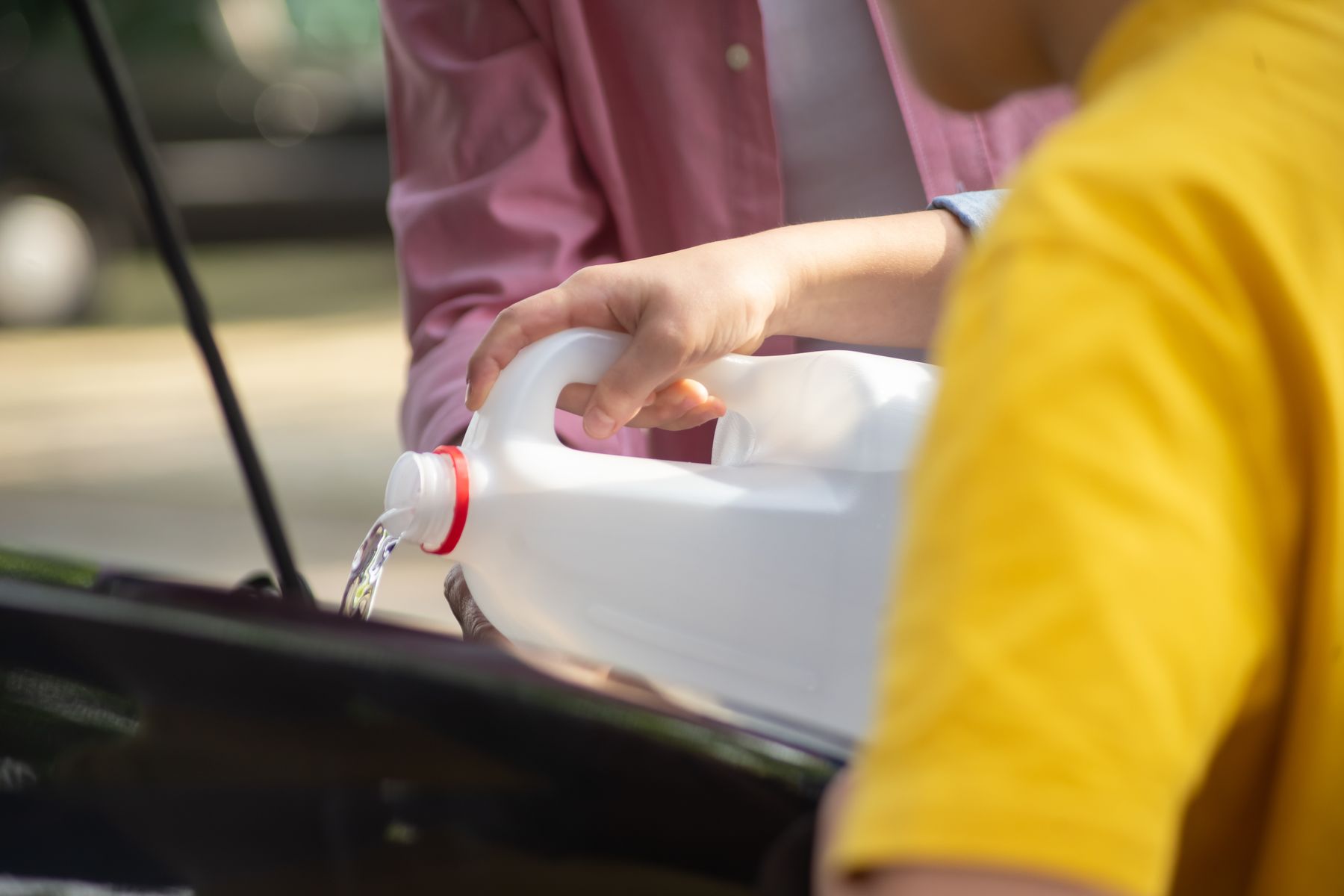
When topping up, use the coolant type and concentration specified for your vehicle. Many systems use premixed 50/50 coolant, while others require a specific concentrate ratio. Mixing incompatible chemistries can reduce corrosion protection. If you only have water available in an emergency, add enough to reach the minimum mark, then replace with the correct mixture as soon as practical.
Realistic outcomes depend on the cause. A small air pocket can settle after a proper warm-up and cool-down cycle, and the level may stabilize. A persistent low level after repeated cold checks usually means a leak, and the fix typically requires locating the source rather than repeated topping.
Cold Vs Hot: What You’ll See
Cold reading focuses on the baseline volume the system holds when thermal expansion is minimal. Hot reading shows the expanded volume and the reservoir’s overflow behavior. Because the expansion tank is designed to manage this cycle, the “correct” target is usually the cold MIN/MAX range, not the hot position.
Some owners prefer hot checks because they can do them immediately after a drive. That approach works only if the manual provides a hot reference range and the reservoir design supports it. Without a specified hot target, hot readings become harder to interpret because the level depends on ambient temperature, driving duration, and how long the engine idled before shutdown.
On cars with a sight glass, the hot view can look misleading if the tank has trapped bubbles. Those bubbles can move with circulation and settle later, so a single hot glance can overstate the problem. If you want a consistent method, use cold checks for trend tracking and use hot checks only for confirming a symptom described by the manual.
Educational Case Examples
Scenario A: A commuter checks the reservoir 10 minutes after parking. The level sits above the MAX line, then returns to the middle of the range after the next morning cold check. The owner initially suspects overfilling, but the pattern matches normal expansion and contraction. The next step is to stop topping up based on the hot view and instead monitor cold readings for stability over several days.
Scenario B: A driver notices the coolant warning light after a long downhill drive. The reservoir appears slightly below MIN when checked cold the next morning. The owner tops up to MIN with the correct premix, then checks again after two full heat cycles. The level drops again within a week, and the mechanic finds seepage at a hose clamp. The lesson is that a low cold level that keeps trending downward points to a leak, not just temperature effects.
Comparison Checklist For Decisions
| Situation | Best Reading To Use | What “Normal” Looks Like | Next Step |
|---|---|---|---|
| After driving | Cold check after cooling | Hot level may be higher; cold level returns to MIN–MAX range | Wait, then compare to cold marks; avoid topping up based on hot view |
| Dashboard coolant warning | Cold reservoir level + visual inspection | Level stable after topping only if leak is fixed | Inspect hoses, clamps, reservoir seams; schedule pressure test if it drops again |
| Visible wetness or odor | Cold check for baseline, then leak hunt | Level may fluctuate; leak evidence persists | Do not keep driving if overheating occurs; get system inspected |
| Need to top up | Cold fill to the specified mark | Level returns to target after cooling cycles | Use correct coolant type and ratio; recheck after 1–2 heat cycles |
Common Mistakes That Mislead
One mistake is topping up repeatedly after a hot check. That can lead to overfilling when the system cools, which may push coolant out through the venting system. Another mistake is ignoring the difference between reservoir markings and radiator fill instructions. Some manuals specify a radiator fill level only during service, while the reservoir MIN/MAX is the day-to-day reference.
People also skip the “trend” part. A single reading rarely tells the whole story because coolant level can change with driving style and ambient temperature. A better approach is to record cold readings on the same schedule, such as once every few days, then look for a consistent downward trend.
Another recurring issue is using the wrong fluid. Mixing coolant types can create gel-like deposits or reduce corrosion protection, depending on the chemistry. If you do not know what’s already in the system, the safest next step is to identify the coolant spec from the vehicle documentation or a label on the reservoir, then match it.
Finally, some owners open the system when it’s still warm. Even if the cap seems cool, residual pressure can remain. That risk is not theoretical; it’s a burn hazard, and it also introduces air into the system, which can complicate future readings.
FAQ
Can I Check Coolant Level When Hot?
You can check the reservoir when hot only if your owner manual gives a hot reference range. Without that guidance, use a cold check because expansion changes the visible level.
Why Does My Coolant Level Rise After Driving?
Coolant expands as the engine heats, and the expansion tank collects overflow. The level typically drops back after cooling, so a higher hot reading alone does not indicate a leak.
What If The Reservoir Is Below MIN When Cold?
Top up to the specified mark with the correct coolant mixture, then recheck after one or two heat cycles. If the cold level keeps dropping, inspect for leaks and consider a pressure test.
Is It Safe To Open The Radiator Cap On A Warm Engine?
No. The cooling system is pressurized, and opening the cap when warm can cause scalding. Wait for full cooling and follow the manual’s procedure.
How Often Should I Monitor Coolant Level?
Check during routine maintenance intervals and whenever a warning light appears. For a suspected leak, record cold readings every few days until the trend is clear.
Author's Insight
Coolant level checks work best when you treat temperature as a variable rather than a nuisance. Cold readings provide a stable baseline because thermal expansion is minimal, while hot readings reflect the system’s expansion behavior. The reservoir design, MIN/MAX markings, and whether the car uses a level sensor all affect interpretation. If you want a reliable method, follow the manual’s temperature state, compare to the correct container markings, and track cold readings over multiple cycles instead of reacting to one hot snapshot.
Key Takeaways
- Use the temperature state specified by your owner manual; cold checks usually provide the most consistent baseline.
- Check the expansion reservoir for day-to-day monitoring; avoid opening radiator caps on warm or hot systems.
- Normal behavior shows hot rise followed by cold return; a steady cold drop points to a leak or consumption.
- Top up with the correct coolant type and concentration, then recheck after heat cycles to confirm the fix.